Seated Cable Row: Form Guide for a Stronger Back
If you spend much of your day at a desk, your chest and shoulders tend to round forward. Strengthening the muscles of your upper and middle back is one of the most effective ways to counter that, and the seated cable row is one of the best tools for the job.
Because the cable provides constant tension and the seat supports your body, it's a great row for beginners and experienced lifters alike. Here's how to do it properly.
Muscles Worked
- Latissimus dorsi: the large muscles of the back that pull your arms down and back.
- Rhomboids and middle trapezius: squeeze your shoulder blades together and support good posture.
- Rear deltoids: the back of the shoulders, often neglected.
- Biceps and forearms: assist the pull and build grip strength.
How to Do a Seated Cable Row
- Attach a close-grip V-handle, sit on the bench and place your feet on the platform with knees slightly bent.
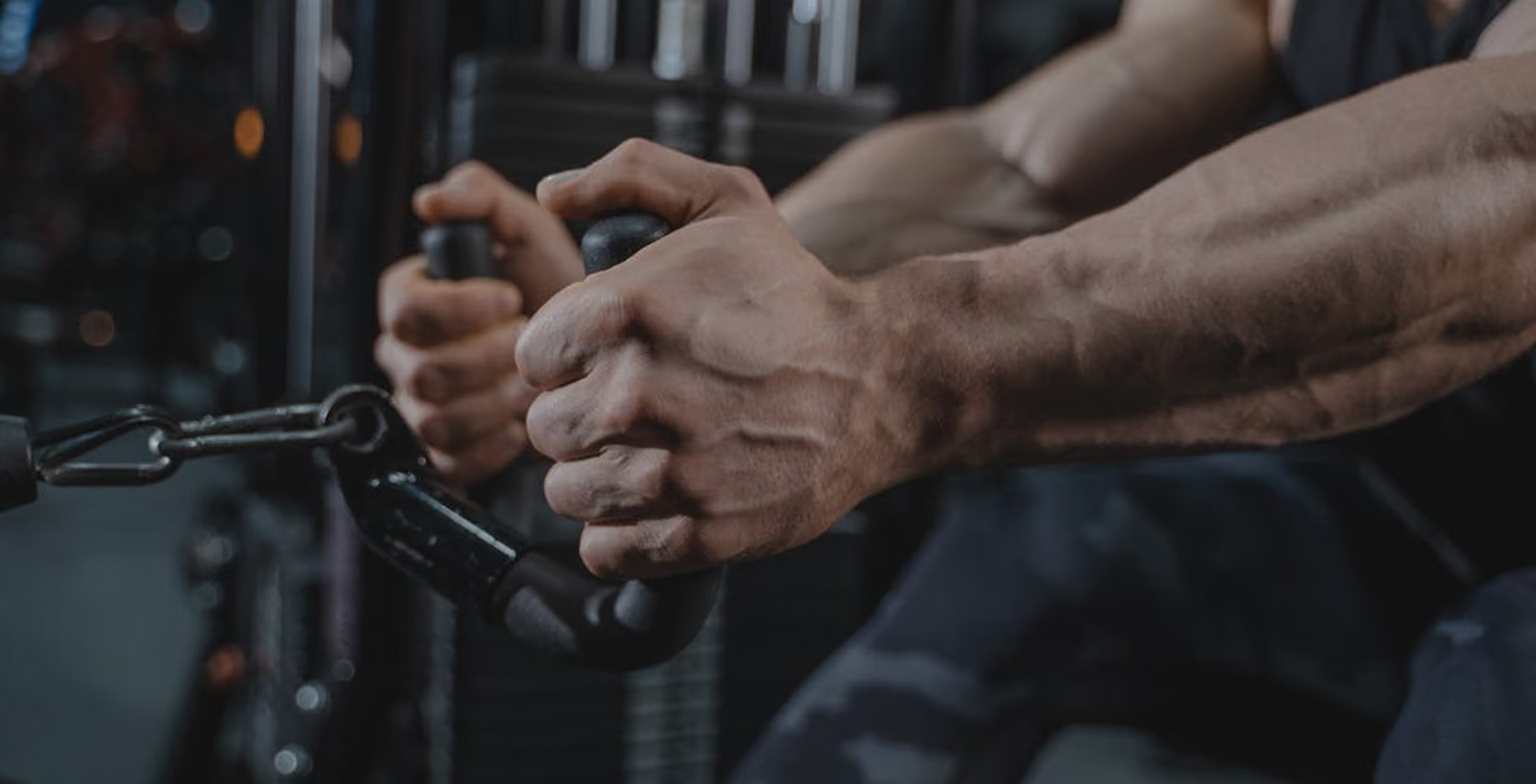
- Grab the handle with a neutral grip (palms facing each other) and sit tall with your chest up and arms straight.
- Start the movement by drawing your shoulder blades back and down, then pull the handle towards your lower ribs.
- Keep your elbows close to your sides and pause for a second when the handle touches your stomach.
- Return slowly until your arms are straight and you feel a stretch across your upper back, without letting your shoulders roll forward.
Your torso should stay almost upright throughout. A small forward lean at the start is fine, but you shouldn't be rocking back and forth to move the weight.

Common Mistakes to Avoid
- Using your lower back: swinging your torso turns a back exercise into a momentum exercise. Reduce the load.
- Shrugging: if your shoulders rise towards your ears, your upper traps are taking over. Think "shoulders in back pockets".
- Gripping too hard: a death grip makes your arms work more than your back. Hold firmly and pull with your elbows.
- Rushing the return: the slow lowering phase builds as much strength as the pull. Take two to three seconds on the way back.
Grip Variations
A V-handle is the best place to start. Once you're comfortable, try a wide bar with an overhand grip to target the upper back and rear shoulders, or single-arm rows with a D-handle to fix side-to-side imbalances.
Sets, Reps and Programming
For strength and muscle, perform three to four sets of 8–12 reps, two times per week. Pick a weight where the last two reps are challenging but your form stays clean. Rest 60–90 seconds between sets.
As a rule of thumb, aim to do at least as many pulling sets as pushing sets each week. If you bench press or do push-ups, pair them with rows in the same session.

Stronger Back, Better Posture
The seated cable row is simple, safe and highly effective. Master the technique, increase the weight gradually and you'll build a back that supports every other lift — and helps you sit and stand taller.
Not sure about your form? Our coaches run free technique sessions every week. Book a slot at reception or through the app.